
Chip Seal or Gravel for Rural Drives Near Houston
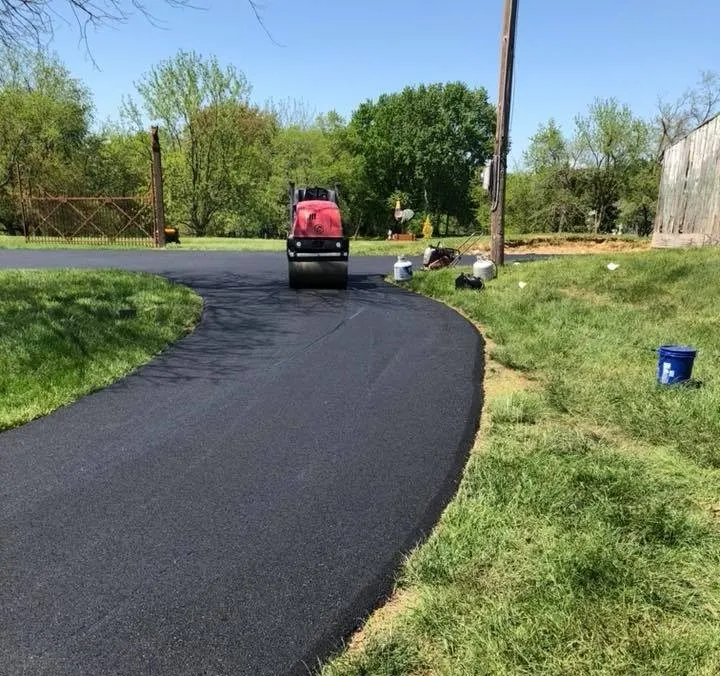
For a rural drive in the Houston area, chip seal is usually the better fit when you want a firmer, lower-dust surface that you do not have to regrade often. Gravel often costs less to put down and may be manageable to top up yourself, but it keeps moving under tires. Our chip seal paving work sits between loose gravel and full asphalt, and the right pick depends on how you use the road.
How chip seal and gravel are built
Chip seal starts with a binder, which is an asphalt-based material sprayed onto the prepared surface. Crushed stone is spread over it right away and rolled in so the chips bond to the binder. Once the binder sets, the sweeping removes the stone that did not bond.
Gravel is loose aggregate spread over the ground or a base layer. Nothing holds the stones together, so tires push them to the edges and into ruts. That is why gravel drives need periodic reshaping (called regrading) and new stone added over time.
Both surfaces depend on what is underneath. A chip seal laid over a weak or wet base will show it. If you are thinking about chip seal driveway paving, consider the base before the stone.
Which surface fits your drive
Start with traffic. A drive that sees a few cars a day behaves very differently from one that carries feed trucks, trailers or deliveries. Heavy, turning loads can scatter gravel. A bonded chip seal surface may hold up better to that kind of use, though tight turns and sharp stops still wear it faster than a straight run.
Then look at dust and loose stone. Gravel throws dust in dry weather and tosses stones against vehicles and landscaping. Chip seal cuts the dust a lot, but fresh chip seal can shed some loose stone for a short time after it goes down. If you cannot live with any loose stone, tell us up front.
For drives in Magnolia, Conroe and Montgomery, base the choice on how the road is actually used, not just how long it is. A long drive with light traffic can stay gravel for years. A shorter drive that carries daily heavy loads may be the one that needs a bonded surface.
| Factor | Chip seal | Gravel |
|---|---|---|
| Surface | Stone bonded to an asphalt binder | Loose stone, nothing holding it |
| Dust | Much lower once cured | Common in dry spells |
| Loose stone | Some at first; later amounts vary | Constant, moves with traffic |
| Upkeep | Sweeping and spot repairs, resealing over time | Regrading and added stone |
| Upfront work | Needs a sound base and curing time | Can be relatively simple to place and adjust |
Weather and site conditions near Houston
Gulf Coast Texas summers usually run long and humid, and heavy rain can arrive in bursts, especially during hurricane season. Chip seal needs dry conditions while the binder sets, so wet stretches can push a schedule back. That is normal and worth planning around.
If you want the work done in October or November, check the forecast with us before booking a day. Also look at where runoff leaves your drive. Water that crosses the driving surface or pools at low spots can wash out gravel or damage chip seal edges. If your drive sits low or the ground stays soggy, drainage may matter more than the surface you pick.
If your lot has clay, it may swell when wet and shrink when dry, which can stress any surface. If your drive climbs toward the road, runoff can pull gravel downhill after a storm. These are conditions to check on your own property, not assumptions we make about a town.
What to check before choosing
Walk the drive after a rain and again on a dry day. Make notes on these points:
- Where gravel has moved into piles, ruts or the ditch line.
- Where dust becomes a problem for the house, vehicles or neighbors.
- Where water crosses the driving surface instead of leaving it.
- What vehicles use the drive, and how often.
Then write down your upkeep expectations. If you are fine with a grader or a few loads of stone now and then, gravel may be enough. If you want to stop doing that, ask what preparation each surface needs before anything goes down.
For longer stretches such as pasture access or a rural lane, our ranch road paving page explains how we handle those jobs. We bring 30+ years of experience to these decisions, but a new surface may not be necessary if gravel meets your needs.
Ready to compare options for your drive? We offer a Free Estimate.
Common questions
Is chip seal better than gravel?
For most drives that carry regular traffic and where dust matters, yes, because the stone is bonded in place. For a lightly used drive where you are happy to regrade, gravel can be enough.
How long before I can drive on a new chip seal driveway?
Many crews ask you to wait 24 to 48 hours before driving on it, and to go slowly for a while after that. Ask your crew for timing based on the weather and the job.
Can you put chip seal over an existing gravel drive?
Sometimes, if the gravel base is firm, even and drains well. A soft, rutted or washed-out base usually needs repair first, so ask what repairs are needed before requesting a quote.
Areas we serve
Our services
Have a question about your project? Call (361) 645-7270