
Chip Seal for Dusty Drives in Angleton and Baytown
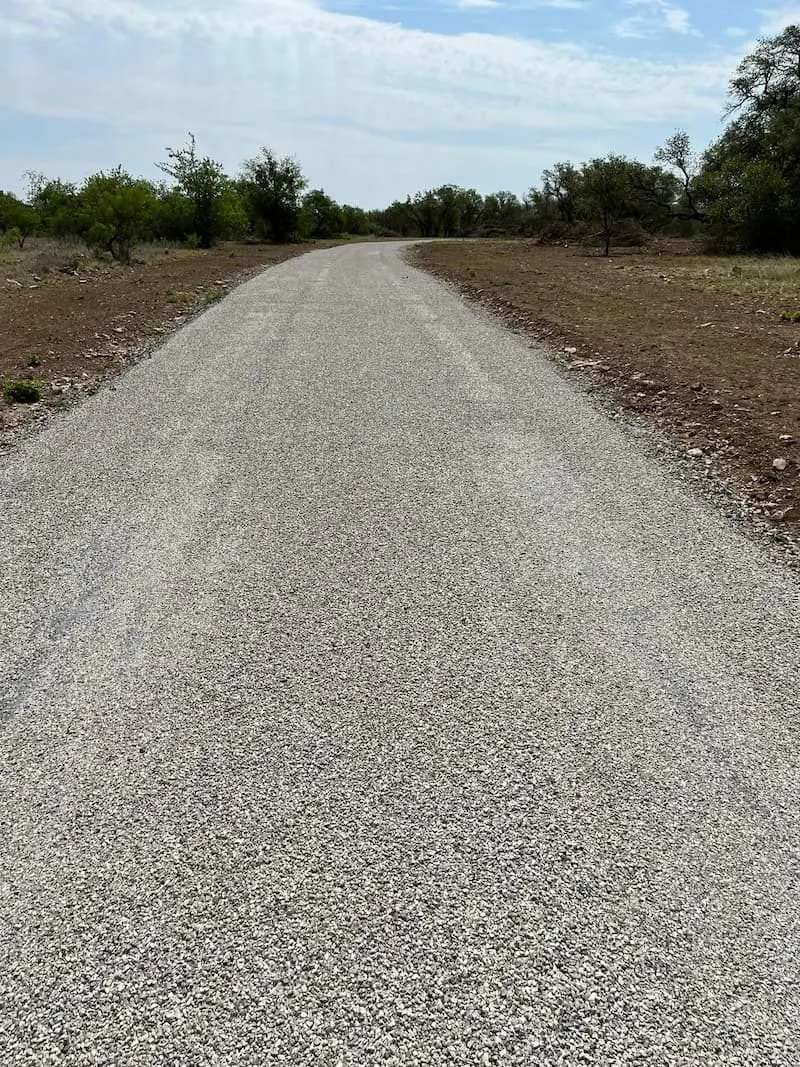
Chip seal can control driveway dust when the dust comes from a loose surface sitting on a firm, well-drained base. It will not cure dust that comes from a soft base or water that keeps washing the drive out. For a drive near Angleton or Baytown, the first job is figuring out which problem you have.
Find the source of the dust
Dust from a loose surface looks different from trouble underneath. Loose-surface dust rises behind a tire on a dry day, then settles. Base or drainage trouble shows up after rain as mud, ruts, soft spots and puddles that stay for days.
Walk the drive and look at where the dust starts. Does it kick up at the gate, in the turnaround, or along the whole length? Dust that concentrates where vehicles brake, turn or accelerate usually points to surface material being pushed around. Dust in bare patches where the stone has worn away points to a surface that has thinned out.
- Dust only on dry days, firm underfoot after rain: likely a loose surface.
- Ruts, soft spots or standing water after rain: likely a base or drainage problem.
- Dust that returns within weeks of fresh gravel: material is not bonding and is being thrown to the edges.
How chip seal can control loose surface material
Chip seal, also called tar and chip, is a liquid asphalt binder sprayed onto the prepared surface, then covered with stone aggregate (crushed rock) that is rolled in. The binder grips the stone and the layer beneath it, so tires ride on a bonded surface instead of loose fines. That is what takes the dust out of the air.
The catch is the base. A chip seal is a thin surface treatment, and it can only be as stable as what is under it. On a firm base it can hold loose material in place. Over a soft spot it will flex and crack, and over a drainage problem the water will keep working on it. You can read more about the process on our chip seal paving page.
Where it fits on a driveway
A chip seal driveway suits a gravel or dirt drive that is mostly sound but sheds dust and stone. If the drive is short and sees daily traffic from several vehicles, a bonded surface also stops the constant scattering of rock into the yard.
Conditions to consider around Angleton and Baytown
Gulf Coast conditions are usually humid, and heavy rain can arrive in any month. Even so, dry stretches leave loose surfaces dusty, and a drive can swing from dusty to rutted within the same month. Plan for both. A surface that looks fine in a dry week still has to handle the next downpour.
November and December weather can vary, so judge the drive by how rain moves across it as well as how it behaves when dry. If you have a drive in Angleton or Baytown and your yard is clay or sits low, watch where runoff goes after a storm. Water that crosses the drive or pools on it is the first thing to sort out.
For a long private drive or ranch road, think about the whole route. Traffic is rarely even. Gates, curves, turning areas and spots where trucks or trailers swing wide take the most wear, and they may need more attention than the straight runs. A private driveway paving plan should cover the full route, not just the stretch nearest the house.
What to check before choosing a dust fix
Spend a few minutes after the next rain. It tells you more than a dry day does.
- Walk the drive and mark soft spots with a stake or flag.
- Note where water crosses, collects or runs off the edge.
- Mark the dustiest sections and what vehicles do there (braking, turning, climbing).
- Check the edges for stone that has been thrown off the drive.
- Ask for an assessment of the base and drainage before settling on a surface.
| What you see | Likely cause | Where chip seal fits |
|---|---|---|
| Dust on dry days, firm after rain | Loose surface material | Often a good match |
| Soft spots or ruts after rain | Weak base | Base repair comes first |
| Standing water or washouts | Drainage problem | Fix water flow first |
| Bare patches, thin stone | Worn surface | Depends on base condition |
If you have been weighing gravel against a bonded surface, our Chip Seal or Gravel for Rural Drives Near Houston post covers that choice in more detail.
Next step
If your drive is dusty and you cannot tell why, we will look at it with you. With 30+ years of experience behind our work, we can tell you whether chip seal fits or whether the base and drainage need attention first. Ask for a Free Estimate.
Common questions
How does chip seal control driveway dust?
The liquid asphalt binder glues the stone and surface fines together, so tires no longer grind loose material into powder. It works best when the base underneath is firm.
What causes dust on a gravel drive?
Traffic crushes and displaces fine particles in the gravel, and dry weather lets them lift into the air. Thin gravel and heavy braking or turning areas make it worse.
Can chip seal work on a ranch road with dust problems?
It can on stretches where the base is stable and drainage is handled. Long roads often need a section-by-section look, since turning areas and gates take more wear than the straight runs.
Topics
Areas we serve
Our services
Have a question about your project? Call (361) 645-7270